

English Test Submit Application

How to Choose a Foundation Programme in the UK: A Complete Guide for International Students

Reading time: 7 min
21 May 2026
Views: 492
Author: edvision
How to Choose a Foundation Programme in the UK: A Complete Guide for International Students

Choosing a UK foundation programme sounds straightforward until the brochures arrive. One offers the route to King’s College London, another a faster path through a sixth-form college, a third focuses entirely on art portfolios. They are all called “foundation,” and they are not the same thing. For families investing £25,000-plus on a year that should open the door to a British university, getting this choice right matters. This guide walks through how to do it.

What is a UK foundation programme, and why it exists

Most UK universities expect students to have completed 13 years of schooling before starting a degree. The British system reaches that point at age 18 with A-Levels. Many international school systems — in Russia, the UAE, Nigeria, Brazil, China, India and much of Europe — finish a year earlier, at 17. A UK foundation programme bridges that gap. It compresses the final year of academic preparation, intensive English-language work and an introduction to British teaching styles into one year, so a student can move straight on to a UK undergraduate degree.

The term itself causes confusion. Some international families hear “foundation” and picture a stage of early secondary education. In the UK, in the context this article addresses, a foundation programme is a pre-university year for students aged roughly 17 to 19. It is not the same as the British school system’s own foundation stages for younger pupils. Understanding the British education system end-to-end helps put the foundation year in its proper place: a final stepping stone, not a remedial detour.

The three types of UK foundation programme

This is where most families get the choice wrong. UK foundation programmes split into three different categories, and each suits a different kind of student.

University-run foundation programmes

These are taught and assessed directly by a UK university. The student is on a university campus from day one, taught by university academics, and uses the same library and facilities as undergraduates. The strongest example is King’s International Foundation at King’s College London, the largest university-run foundation in the UK, with around 75% of completing students progressing to a King’s undergraduate degree. King’s offers four pathways: Health, Life and Biosciences; STEM and Natural Sciences; Politics, Culture and Social Sciences; Business and Economics. Tuition for 2026/27 is £28,150 for the standard one-year programme.

The University of Warwick’s International Foundation Programme has run for more than 40 years, with 2026/27 tuition at £27,150 and a guaranteed conditional offer to a relevant Warwick undergraduate course on successful completion. The University of London also runs an International Foundation Programme that is accepted by a wide network of UK universities, not just University of London colleges. This portability is useful for families who want to keep the undergraduate destination open.

University-run foundations work best when the student already has a clear preferred university and is confident about the academic level required.

School and college-based academic foundations

These are delivered by independent sixth-form colleges and schools, often validated through partnerships with consortia such as NCUK or with individual universities. The Abbey DLD Colleges Group, covering Abbey College Cambridge, Abbey College Manchester and DLD College London, runs an International Foundation Programme with pathways in Business, Science, Engineering, Humanities and Creative Arts. In 2023, 141 students from across the three colleges progressed to UK universities including Durham, Bath, King’s College London, Manchester, Warwick and York.

Queen Ethelburga’s College in York offers the NCUK International Foundation Year in Business or Science, introduced for 2024 entry, which gives access to over 60 NCUK partner universities worldwide.

School and college-based foundations suit students who would benefit from smaller class sizes, boarding accommodation and structured pastoral support, and who want to keep their university options broad rather than commit to one institution from day one.

Creative arts foundation pathways

Students aiming at art, design, photography, fashion or architecture follow a different route. The destination is usually the University of the Arts London (UAL) Foundation, Goldsmiths, Glasgow School of Art or similar, and the pathway is portfolio-led rather than examination-led. Rochester Independent College runs a Pre-UAL Foundation Preparation course (two terms or one academic year) for international students aged 16 and over with IELTS 5.0, focused on building a strong creative portfolio while developing the academic English needed for a UAL Foundation application.

This is not an academic foundation in the traditional sense. The progression target is the UAL Foundation course itself, which then leads on to undergraduate study at a specialist art and design institution.
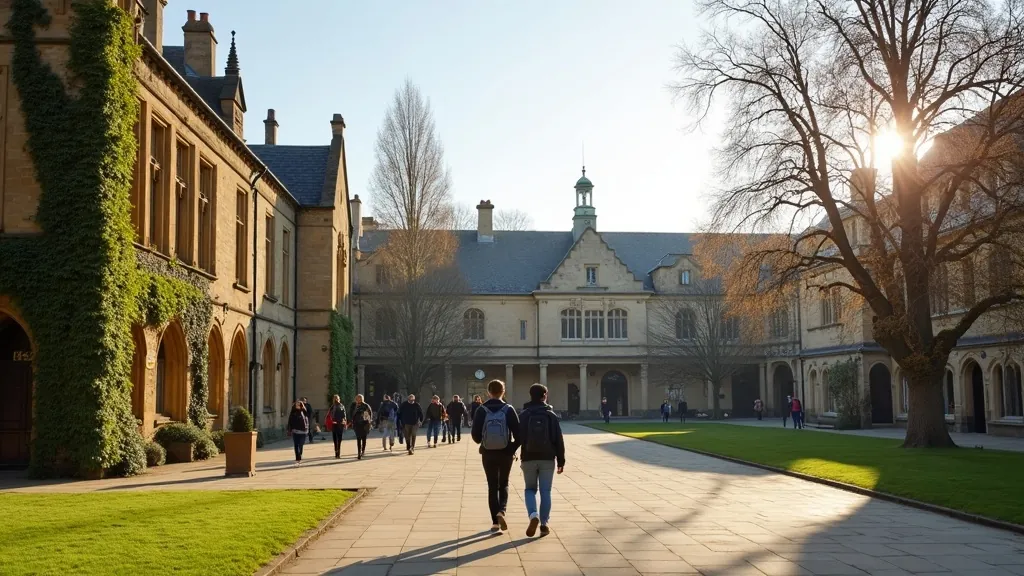
Students walking through a sunlit traditional British university campus courtyard

Entry requirements for a UK foundation programme

Most providers expect three things: completed secondary education with strong grades, demonstrated English language ability, and a clear academic interest aligned with one of their pathways.

English requirements vary by provider and by pathway, but typical IELTS Academic bands for 2026/27 entry look roughly like this:

Pathway type Typical IELTS Notes
One-year academic foundation 5.0–5.5 Standard pathway, most subjects
Medicine or science with strong English needs 6.0–6.5 Higher because clinical or research-led
Extended foundation (18 months or 2 years) 4.0–4.5 Includes intensive pre-sessional English
Creative arts (UAL preparation) 5.0 Plus portfolio

Academic transcripts from the home school typically need to show completion of the equivalent of UK Year 12, with subject-specific strengths matching the intended pathway. For medicine, biology and chemistry are usually required. For engineering, mathematics and physics. The home school’s grading system will be benchmarked against UK standards by the provider during the application process.

Foundation year fees and what they include

Tuition for university-run foundations sits in the £25,000–£30,000 range for 2026/27. KCL is £28,150, Warwick is £27,150, and most other Russell Group university-run programmes cluster in similar territory. School and college-based foundations vary more widely, with typical tuition between £25,000 and £42,000 per year, plus another £10,000–£15,000 on top for boarding accommodation. Creative arts pathways at independent colleges are usually charged at the same rate as the college’s sixth-form fees.

Tuition normally includes academic teaching, assessments, access to the library and learning resources, and basic pastoral support. It does not include accommodation, food, books and materials, transport, UK visa and Immigration Health Surcharge fees, or insurance. A realistic total budget for one foundation year, including living costs in a UK city, sits between £45,000 and £65,000 depending on provider and location. London is at the higher end; regional cities and provincial colleges are lower.

Foundation year vs A-Level: when each makes sense

This is one of the most common questions international families ask. A-Levels are a two-year qualification taken in Years 12 and 13: typically three or four subjects studied in depth, with strong recognition at every UK university including Oxford and Cambridge. A foundation programme is one year, broader in scope, and accepted by most UK universities with the notable exception of Oxford and Cambridge, where direct entry from a UK foundation is rare. For a fuller breakdown of UK qualifications, see our guide to British exams.

A foundation makes sense when the student is 17 or 18, finishing secondary school in their home country, and wants to start university within one year. It also makes sense when the home-country qualification is not directly recognised by UK universities, when English needs significant strengthening before degree-level study, or when the student wants to switch academic direction without committing to two years of A-Levels.

A-Levels remain the stronger choice when the student is 16 with two years available, aims at Oxford, Cambridge, or competitive medicine and law programmes, or when long-term integration into the British system matters more than speed of entry.

How to choose the right provider: six practical questions

The choice tends to clarify itself once a family answers these six questions honestly:

  1. Which university is the goal? If a single university is the clear destination, its own foundation programme usually gives the strongest progression. If the family wants to keep options open, a college-based foundation with broad recognition is better suited.
  2. What subject? Different providers specialise differently. Medical and biomedical pathways are scarce and competitive. Engineering and business pathways are well covered everywhere. Creative arts is a separate market.
  3. What is your child’s current English level? An IELTS of 4.5 needs an extended or pre-sessional pathway. IELTS 5.5 or above can usually start a standard one-year programme directly.
  4. Day or boarding? University-run foundations are typically day programmes with private rented accommodation. Boarding is usually only available through sixth-form colleges and independent schools.
  5. What is the realistic annual budget? All-in costs of £45,000–£65,000 for one year are normal. Working backwards from the budget often narrows the provider shortlist quickly.
  6. What is the plan if grades don’t meet the progression threshold? Every foundation has a minimum exit grade. Asking the provider what happens to students who fall short, including re-sit options and alternative routes, reveals how seriously they take outcomes.

Common misconceptions about foundation programmes

Three myths come up in almost every consultation with families considering this route. First, that a foundation programme guarantees admission to a Russell Group university. It does not. Progression depends on grades, on the specific agreement between the foundation provider and the destination university, and on the competitiveness of the chosen undergraduate course that year. A guaranteed conditional offer is just that: conditional.

Second, that all foundation programmes are broadly equivalent. They are not. Accreditation status, university recognition, pathway specialisation, progression rates and academic rigour vary widely between providers. A foundation from a well-known university or established college is recognised differently from one offered by a small private school with no track record.

Third, that foundation is only for academically weak students. This is the most damaging assumption. In reality, foundation programmes are often the most appropriate route for strong students from non-13-year school systems, simply because the UK academic year does not match their home-country qualifications. A student with excellent grades from a Russian or UAE school may still need a UK foundation programme for structural reasons rather than ability ones.

Student researching UK foundation programmes on laptop with open textbook and notes

The admission timeline: when to start the process

UK foundation programmes start in September each year. The strongest applications are submitted by January or February of the same year, although some providers continue to accept applications into spring and summer for the upcoming September intake. English language testing should be completed early; IELTS scores are valid for two years, and most providers want a recent result on file. UK student visa processing typically takes six to eight weeks once an unconditional offer is in place. A realistic working timeline is to start serious provider research 12 to 14 months before the intended September start.

Choosing the right UK foundation programme means matching the student’s age, current academic profile, target university, intended subject and family budget to the provider that fits best. The difference between a well-chosen and a poorly-chosen foundation is sometimes the difference between starting at a Russell Group university and repeating a year.

Frequently Asked Questions

Can my child apply to Oxford or Cambridge after a UK foundation programme?

In most cases, no. Oxford and Cambridge generally require A-Levels, the International Baccalaureate, or equivalent two-year qualifications for direct undergraduate entry. A small number of Oxbridge colleges may consider applicants from specific university-run foundation programmes on a case-by-case basis, but this is the exception rather than the rule. Families targeting Oxbridge should plan for A-Levels or the IB Diploma instead.

How long is a UK foundation programme?

The standard foundation programme is one academic year, running from September to June or July. Some providers offer extended versions of 18 months or two years, which include additional pre-sessional English language preparation for students whose IELTS is below the standard entry threshold. Creative arts pathways at independent colleges sometimes run as two-term or full-year preparation courses before the main UAL Foundation year.

What is the difference between a university-run and a third-party foundation programme?

A university-run foundation is taught directly by the university itself, on campus, with progression typically guaranteed to that university subject to grade requirements. King’s College London and Warwick run programmes of this type. A third-party foundation is delivered by a private college, school or pathway provider such as Abbey DLD Group or NCUK-partner schools. These offer broader university choice on completion but progression depends on the provider’s individual agreements with destination universities.

Can a foundation programme replace A-Levels for UK university entry?

For most UK universities, yes. A successfully completed foundation programme is accepted as an equivalent entry qualification at the majority of Russell Group and other UK universities, with a few exceptions including Oxford and Cambridge. The acceptance depends on the specific university and course. Foundation programmes are particularly common as an alternative to A-Levels for international students who would otherwise need two years to complete the British qualification.

What happens if my child does not meet the progression grade?

Every foundation programme sets a minimum exit grade for progression to the next stage. If a student falls short, options vary by provider. Some allow module resits or extended study to retake assessments. Others support the student in applying to lower-ranked universities that accept lower foundation grades. A few have no fallback at all, which is one of the most important questions to ask a provider before committing.

Related articles

How To Spend The Summer Productively: An English Summer Camp Programme How To Spend The Summer Productively: An English Summer Camp Programme
17.03.2026

Summer holidays are no longer seen as just a time for rest. Today, many parents view them as an opportunity…

The British Model Of Upper Secondary Education: From A-Levels To Professional Diplomas The British Model Of Upper Secondary Education: From A-Levels To Professional Diplomas
15.03.2026

Many parents find the terminology of the British education system confusing. What is often described as upper…

How To Choose A Summer Camp In The UK: A Complete Guide For Parents How To Choose A Summer Camp In The UK: A Complete Guide For Parents
27.01.2026

Summer holidays are the time when parents ask an important question: how can a child spend this period in the…

Study Abroad Destinations: How To Choose The Right Country For Your Goals Study Abroad Destinations: How To Choose The Right Country For Your Goals
15.01.2026

Choosing a country to study abroad is one of the most important educational decisions a student — and their family — will ever make. Today’s international education market offers dozens of destinations, each with its own advantages, academic strengths, and long-term opportunities. From globally recognised degrees and post-study work options to language environment and cost of living, selecting the right country requires more than following trends. It is about aligning education with personal goals, career plans, and practical considerations — and making an informed choice that will shape the future.

Free consultation

Submit your request and our manager will contact you shortly

    Preferred contact method:
    By submitting this form, you agree to our Terms of Service and Privacy Policy.
    20 Wenlock Road, London, England, N1 7GU
    +44 7520 603085
    info@edvision-group.com
    whatsapp

    Terms of Service (Public Offer)

    Academic Acceleration Group LTD (Company No. 16714351)

    Academic Acceleration Group LTD (Company No. 16714351), trading as EDVISION Group, hereinafter the “Service Provider”, publishes this document (the “Public Offer”), which is an official offer to any individual or legal entity (the “Customer”) to enter into a services agreement on the terms set out below.
    1. Terms and Definitions

    1.1. Services are consulting and related services provided by the Service Provider to support admission and study at educational institutions, including private schools and camps in the United Kingdom, as well as assistance with document preparation and submission, organisation of accommodation, meals, guardianship and other related arrangements. Services may be provided remotely via the Internet, by phone and/or in person at the Service Provider’s location.
    1.2. Customer means any individual or legal entity that accepts this Public Offer (Agreement).
    1.3. Parties means the Service Provider and the Customer collectively.
    1.4. Party means either the Service Provider or the Customer separately.
    1.5. Student means the Customer or another individual (e.g., the Customer’s child) in whose interests the Agreement is concluded and to whom educational services of educational institutions are intended.
    1.6. Service Provider’s website: https://edvision-group.com.
    1.7. Educational institution means an organisation providing educational services (including a private school, college, language centre or camp) with its own admission requirements and policies.
    1.8. Public Offer means this offer to enter into a services agreement published on the Service Provider’s website and/or in other forms that reference these terms.
    1.9. Appendix to the Agreement is an integral part of the Agreement and may contain the scope of Services, pricing, delivery procedure and other terms. Appendices may be published on the website or sent to the Customer by email.

    2. Subject of the Agreement

    2.1. The Service Provider undertakes to provide the Services, and the Customer undertakes to accept and pay for them.
    2.2. The scope of Services, delivery procedure and other terms may be specified in Appendices and/or separate written offers sent by the Service Provider.
    2.3. Communications sent by the Service Provider to the Customer may include terms for Services different from those stated in Appendices.
    2.4. The Parties will use the Customer’s email and phone number specified in the offer for communication.

    3. Fees and Payment

    3.1. The price of Services is determined by the Service Provider in the price list, invoice or an individual agreement.
    3.2. Payment may be made by:

    • wire transfer or bank transfer to the Service Provider’s account;
    • credit or debit card (Visa, Mastercard) via a secure payment link provided by the Service Provider;
    • Revolut or PayPal transfer to the account specified by the Service Provider.

    3.3. Payment may be made in GBP, USD or EUR. If paid in a currency other than GBP, the amount may be recalculated at the Service Provider’s internal exchange rate valid on the payment date, subject to prior agreement with the Customer.
    3.4. The Customer’s payment obligation is deemed fulfilled when funds are credited to the Service Provider’s account or online payment is confirmed.
    3.5. Services are deemed provided in full once the Customer receives documents confirming performance of the agreed obligations (e.g., enrolment letter, programme booking, report).

    4. Rights and Obligations of the Parties

    4.1. The Service Provider shall:
    4.1.1. Provide the Services in accordance with this Agreement and the agreed scope.
    4.1.2. Keep confidential information and personal data provided by the Customer confidential, except where required by applicable law or necessary to perform the Agreement (e.g., sharing with educational institutions).
    4.1.3. Ensure the technical and organisational capability to provide the Services.
    4.1.4. Timely inform the Customer about required actions (document submission, visa procedures, deadlines).
    4.2. The Service Provider may:
    4.2.1. Determine and/or replace specialists involved in providing the Services.
    4.2.2. Require timely payment; in case of non-payment/partial payment, suspend Services until the outstanding amount is settled.
    4.2.3. Request documents and information necessary for providing the Services.
    4.2.4. Suspend Services or refuse performance in case of breach by the Customer or the Student.
    4.2.5. Record communications (correspondence, audio/video of consultations) and keep such records to confirm the fact and quality of Services.
    4.2.6. Exclude a Student from participation in a programme in case of breach of conduct, law or institution rules, notifying the Customer.
    4.3. The Customer shall:
    4.3.1. Pay the Service Provider’s fees in a timely manner.
    4.3.2. Provide accurate information, documents and data necessary for the Services.
    4.3.3. Not disclose confidential information received from the Service Provider in connection with this Agreement.
    4.3.4. Ensure the Student complies with the Agreement, Appendices and educational institution rules.
    4.3.5. Ensure the Student’s consent (if applicable) for processing personal data by the Service Provider and educational institutions.
    4.3.6. Ensure compliance with applicable law and respectful conduct, avoiding discriminatory or unlawful statements/actions.
    4.4. The Customer may:
    4.4.1. Demand proper performance of obligations under this Agreement.
    4.4.2. Receive the Services in the scope and on the terms set out in this Agreement and Appendices.

    5. Liability

    5.1. The Parties are liable for non-performance or improper performance in accordance with this Agreement and applicable law.
    5.2. The Service Provider is not responsible for disruptions caused by the Customer’s side (including lack of technical capability to receive Services).
    5.3. If a technical issue occurs on the Customer’s side, time spent resolving it may be included in the service delivery period.
    5.4. If a technical issue occurs on the Service Provider’s side, such time is not included and may be compensated by rescheduling the relevant part of Services.
    5.5. The Service Provider is not liable for failures caused by unlawful actions of third parties, poor storage of Customer data, platform/email/messenger failures due to viruses or attacks, lack of Customer internet connection, or maintenance work.
    5.6. The Service Provider is not liable for consequences of inaccurate or outdated information provided by the Customer.
    5.7. The Service Provider does not and cannot guarantee admission decisions made by educational institutions or other authorities. The Service Provider provides consulting support that may materially increase the likelihood of a positive outcome based on long-term practice, but outcomes depend on multiple external factors.
    5.8. The Customer guarantees the accuracy of data provided about themselves and/or the Student and undertakes to check correctness before accepting this Offer.
    5.9. The Customer represents that acceptance (including payment) is made by the Customer personally and/or an authorised person in the Customer’s interests.

    6. Force Majeure

    The Parties are released from liability for non-performance due to force majeure circumstances confirmed by competent authorities.

    7. Governing Law and Dispute Resolution

    7.1. This Agreement is governed by and construed in accordance with the laws of England and Wales.
    7.2. Disputes arising out of or in connection with this Agreement shall first be resolved through good-faith negotiations between the Parties.
    7.3. If no agreement is reached, the Parties submit to the exclusive jurisdiction of the courts of England and Wales.

    8. Term and Changes

    8.1. This version of the Public Offer is effective from the moment it is published on the Service Provider’s website and remains valid until cancelled or replaced. The Service Provider may change the terms or cancel the Offer unilaterally; changes apply from the moment the new version is published.
    8.2. For a specific Customer, the Agreement is effective from acceptance and until full performance by the Parties. Updates per clause 8.1 result in corresponding changes to the Parties’ relationship.
    8.3. If the Service Provider does not receive a substantiated written claim within 3 calendar days from the service date, the Service is deemed provided in full and with proper quality.

    9. Service Provider Details
    Legal nameAcademic Acceleration Group LTD
    Trading asEDVISION Group
    Company number16714351
    Registered address20 Wenlock Road, London, England, N1 7GU, United Kingdom
    Emailinfo@edvision-group.com
    Phone+44 7520 603085

    Privacy Policy

    About this policy

    This Privacy Policy explains how Academic Acceleration Group LTD (Company No. 16714351), trading as EDVISION Group (“we”, “us”, “our”), collects and uses your personal data when you visit edvision-group.com or use our services. We are the data controller for the personal data described below and comply with the UK General Data Protection Regulation (UK GDPR) and the Data Protection Act 2018.

    What data we collect

    We may collect the following categories of personal data:

    • Your name/surname and contact details (email, phone number);
    • Information about your educational interests (country of study, education level, etc.);
    • Information about a child/student (age, language level, academic interests);
    • Website interaction history (enquiry forms, applications, messages);
    • IP address, browser/device data and on-site behaviour (via cookies).
    How we use your data

    We use personal data only for the following purposes:

    • Providing consultation about studying abroad;
    • Selecting educational institutions and programmes that match your needs;
    • Contacting you in response to your request;
    • Sending informational and marketing emails (only with your consent);
    • Improving the website and user experience.
    Legal basis for processing

    Under the UK GDPR, we process your personal data on the following legal bases:

    • Performance of a contract — to provide the consulting services you have requested;
    • Legitimate interests — to respond to enquiries, improve our website and develop our services;
    • Consent — for marketing communications and non-essential cookies. You may withdraw consent at any time;
    • Legal obligation — where we are required to retain or disclose data to comply with applicable law.
    Sharing with third parties

    We do not sell or share your personal data with third parties without your consent, except when it is necessary:

    • to fulfil your requests (for example, sharing required information with a partner school, guardianship provider or educational institution);
    • to use trusted service providers who help us operate our business (such as IT, email, payment and analytics providers), bound by confidentiality obligations;
    • to meet legal obligations.
    International transfers

    Where we share data with educational institutions or service providers outside the United Kingdom, we ensure appropriate safeguards are in place in line with UK GDPR requirements (such as adequacy decisions or standard contractual clauses).

    Data storage and security

    We store your data in a secure environment and take reasonable measures to protect it from unauthorised access, alteration, disclosure or destruction.

    Data retention

    We retain personal data only for as long as necessary to fulfil the purposes for which it was collected, or as required by law. Enquiry data is generally retained for up to 3 years from your last contact with us; client records are retained for up to 7 years to meet contractual and statutory obligations.

    Cookies

    We use cookies to analyse website performance and improve user interaction. You can disable cookies in your browser settings.

    Your rights

    Under the UK GDPR you have the right to:

    • Request access to the personal data we hold about you;
    • Request correction or deletion of your data;
    • Restrict or object to the processing of your data;
    • Request data portability;
    • Withdraw your consent to data processing at any time.

    To exercise your rights, please contact us using the details below.

    Complaints

    If you believe we have not handled your personal data properly, you have the right to lodge a complaint with the UK Information Commissioner’s Office (ICO) at ico.org.uk or by calling 0303 123 1113.

    Contact

    If you have any questions about how your data is processed, or wish to exercise any of your rights, please contact:

    • Academic Acceleration Group LTD (trading as EDVISION Group)
    • 20 Wenlock Road, London, England, N1 7GU, United Kingdom
    • Email: info@edvision-group.com
    • Phone: +44 7520 603085
    Changes to this policy

    We may update this Privacy Policy from time to time. The current version is always available on our website. Material changes will be communicated through the website.

    Thank you!

    Your application has been submitted successfully.
    We will contact you shortly