

 RU
RU 
British independent schools offer three living arrangements — not two. Full boarding, day school with a vetted homestay, and day-only attendance each carry distinct costs, pastoral structures and developmental trade-offs. This guide gives international families the complete picture, including what 20% VAT means for fees in 2026/27.
Most international families arrive at the UK independent school conversation expecting a binary choice: boarding or day. The actual picture is more useful. British independent schools accommodate three living arrangements — full boarding, day school combined with a vetted homestay, and day-only attendance from a UK family home — and the third option is the one parents most often overlook. With 20% VAT now applied to independent school fees since January 2025, the financial gap between these formats has widened, and the right answer for a 12-year-old from Lagos is rarely the same as for a 16-year-old from Dubai.
The framing problem in any boarding vs day schools UK comparison is straightforward. Agencies and school marketing materials tend to present boarding and day school as the only options, which suits the operational simplicity of each school but obscures what international families actually need. The UK independent sector accommodates three distinct living arrangements, and treating them as such changes the conversation.
The first is full residential boarding, where a pupil lives at school. The second is day school attendance paired with a homestay: a vetted British host family who provides accommodation, meals and pastoral care while the child commutes to a day school each morning. The third is day-only attendance from a parental home already established in the UK. Each carries different implications for cost, independence, family contact and the child’s daily experience of British life.
For a family based outside the UK, the practical short list is usually the first two. Pure day-only attendance generally requires a parent to be UK-resident on a work visa, settled status or similar, which is a relocation decision in its own right, not simply a school choice. Understanding how the UK independent school sector is structured makes the trade-offs easier to weigh.
No format is universally better. The choice depends on the child’s age, temperament, the family’s situation and budget. Full boarding remains especially popular among UK boarding school international students and families living far from campus, though popularity is not the same as suitability. Giving homestay equal billing matters: for many children it is the better answer.
Full boarding means the pupil lives at school seven days a week, including weekends. The boarding house, not the classroom, becomes the centre of daily life, and the rhythms of that house shape the experience more than any single academic subject.
Most boarding schools organise pupils into houses of roughly 50 to 70 children, each with its own building, common rooms and traditions. A typical weekday begins with breakfast in house, lessons through the morning and afternoon, sport or activities after school, dinner, then “prep”, a supervised evening study period lasting one to two hours. Weekends bring organised programmes: matches, day trips, cultural visits, and downtime within the house. The structure is dense by design, and one consequence is that a boarder’s friendships form quickly and intensely.
The pastoral team is the part of boarding that international parents most often underestimate. Houseparents are experienced staff who live on site within the boarding house and are available to pupils through the day and the night. A matron handles day-to-day welfare: laundry, minor illness, the small domestic mechanics of growing up away from home. Each pupil is also assigned an academic tutor who tracks progress across subjects.
Together this structure is what schools mean by in loco parentis: the school accepts a legal and moral duty of care equivalent to a parent’s for the time the child is in its custody. It is the operational backbone of boarding, and it is the reason the format works for children as young as 11, when it works.
Within boarding, three sub-formats matter. Full boarding means the seven-day week described above. Weekly boarding allows pupils to stay during the week and return home at weekends, which suits families who live within a reasonable distance of school. Flexi-boarding lets a pupil board on pre-selected nights, typically one to three per week, and is most often used as a gentle introduction to residential life rather than a long-term arrangement.
The standard entry points to UK independent schools are 7+, 11+, 13+ and 16+. Boarding is available at most of them, but the picture varies by age. Boarding for under-11s exists but is uncommon at the top academic schools and is rarely the first recommendation for an international family. Most international boarders begin at 11+ (Year 7) or 13+ (Year 9), which align with the natural transitions into senior school. The best age to enrol in a British school depends on the child’s English level, academic profile and emotional readiness for residential life.
Sixth Form entry at 16+ is the other significant arrival point, particularly for international pupils entering specifically for A-Level or the IB. Two-year Sixth Form boarding is a distinct product: older students, smaller cohorts, sharper academic focus and a much shorter adjustment period before university applications begin. For a 16-year-old, weekly or flexi-boarding is less common; the format is overwhelmingly full boarding.
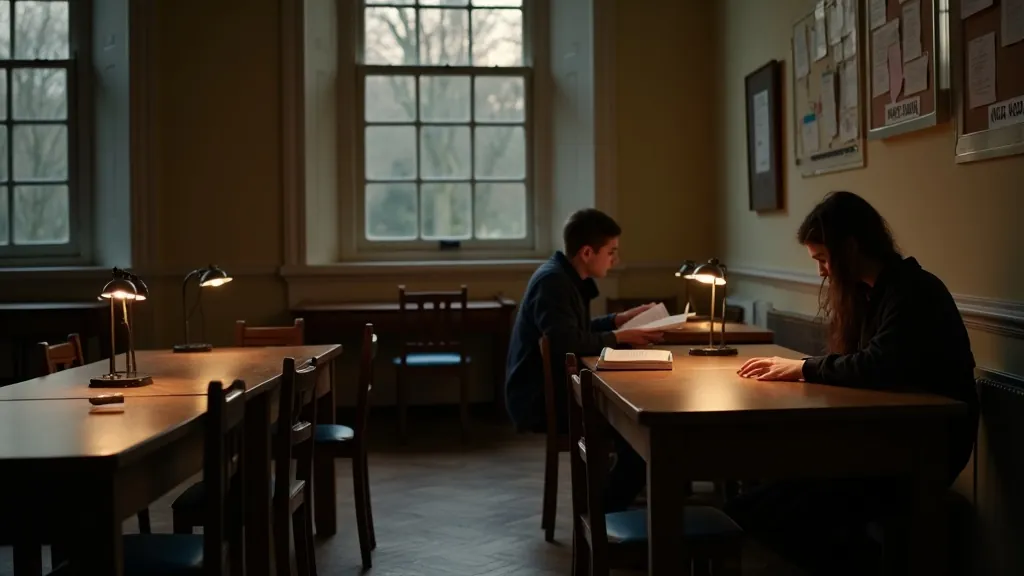
The case for boarding is genuine. A child immerses fully in the school community, builds English at conversational speed, lives within walking distance of every lesson and activity, and gains a structured environment that many international families struggle to replicate at home. The friendships formed in a boarding house often last decades. Weekend programmes mean a pupil is rarely idle, and the absence of a daily commute frees real hours for sport, music and study.
The trade-offs are equally real. Boarding involves early separation from the family at an age when many children still benefit from daily parental contact. The financial commitment is the highest of the three formats: full tuition plus a boarding fee, both now subject to 20% VAT since January 2025. Homesickness is a normal feature of the first term and is well managed by good pastoral teams, but it is not nothing. And in the years between 11 and 16, parents inevitably surrender a share of day-to-day influence over their child’s habits, friendships and values to the school’s culture, which is part of the point and part of the price.
The most common mistake EDVISION sees is treating boarding as the default because it is the most visible option. For some children it is exactly right; for others (particularly younger pupils, only children, or children anxious about long separations) a strong day school paired with a homestay is the better answer. The conversation should start with the child, not the format. Browsing elite British boarding schools is useful for context, but suitability and fit decide outcomes.
Homestay is the arrangement many international parents have heard of vaguely and understood imprecisely. In its UK independent-school context, a homestay means the pupil lives with a vetted British host family who provides accommodation, meals, pastoral care and transport to and from a nearby day school. The host family integrates the child into ordinary household life and communicates regularly with the parents abroad. This is a homestay uk school arrangement designed for term-time, year-on-year care, not a short summer placement.
A typical day looks more like ordinary family life than like a school. Breakfast in the host family kitchen, school run to a day school, lessons and afternoon activities, return for dinner with the host family, an evening of homework and household routine. Weekends are split between time with the hosts and scheduled activities or weekend programmes. The host parents take an active interest in academic progress, attend parents’ evenings where appropriate and report regularly to the family abroad.
Three groups of families consistently find day school with homestay the better fit. The first is families whose child is attending a strong day school that does not offer boarding, or where the right academic match is a day school. The second is families who want their child immersed in British family life rather than a residential institution — the cultural fluency a child develops at a dinner table is different from what they develop in a dining hall. The third is families with younger or more anxious children who are not yet ready for the intensity of full boarding but are ready for life in the UK.
The boarding vs homestay decision is not a choice between boarding and a budget compromise. It is a choice between two legitimate models of British childhood.
Homestay only works because of the framework that surrounds it. Without proper vetting, monitoring and contractual structure, the format would be informal and unsafe. With them, it is a recognised and serious arrangement for under-18 international pupils.
The standard-setting body is AEGIS (the Association for the Education and Guardianship of International Students), founded in 1994 and the only independent UK organisation offering guardianship accreditation. AEGIS-accredited guardianship organisations meet defined standards across safeguarding, child protection, host family vetting, monitoring visits and complaints handling. The Gold Standard is the highest accreditation tier. Schools, colleges and universities across the UK recognise AEGIS accreditation as evidence that an organisation meets professional safeguarding requirements.
In practical terms, an accredited homestay arrangement involves several layers. Host families undergo DBS (Disclosure and Barring Service) criminal record checks. Their homes are visited and assessed before any pupil is placed. Formal contracts define the duties of the guardian, the host family, the school and the parents. Regular monitoring visits, typically once a term at a minimum, verify that the placement is working. A 24-hour contact is available for emergencies, and the guardianship organisation is responsible for collecting the pupil at airports, managing exeats and half-terms, and acting on the school’s behalf in any matter where a parent would normally step in.
This is the practical meaning of in loco parentis in a homestay setting. The accreditation is the credibility floor; without it, the format is uninspectable. EDVISION holds AEGIS accreditation, which is the baseline parents should expect from any UK guardianship partner, not a differentiator.
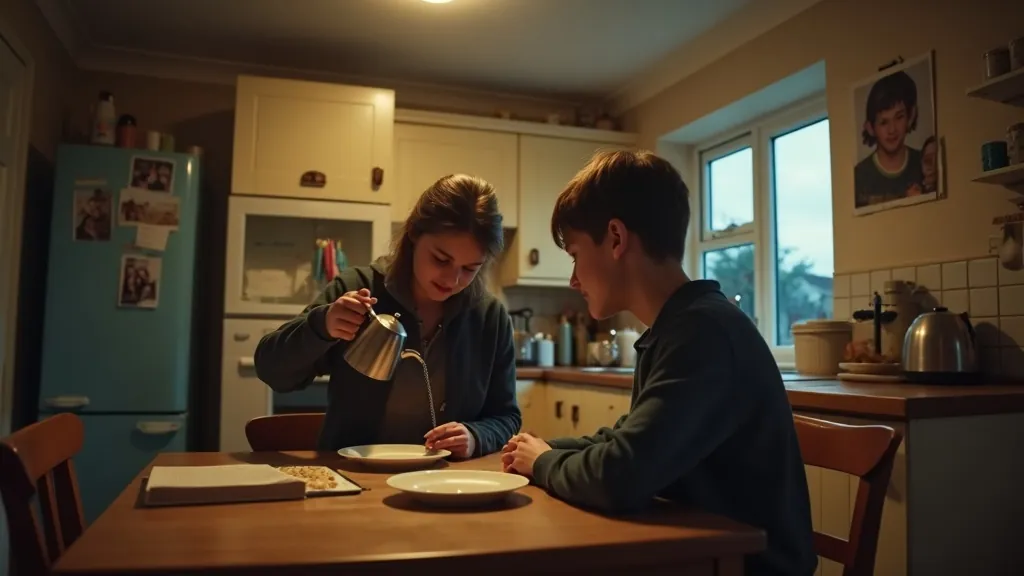
The case for day school with homestay rests on three advantages that boarding cannot replicate. The child lives inside a British family, sharing meals, conversations, weekends and household routines, and the English they develop is conversational and culturally embedded rather than institutional. A host family typically gives more personal adult attention than a boarding house, where one houseparent oversees dozens of pupils; the ratios are simply different. For younger or more anxious children, the transition to UK education is also gentler, since the warmth of a home environment buffers the academic and cultural adjustment.
Cost is usually lower than full boarding once tuition, accommodation and guardianship fees are totalled, though the gap is narrower than parents often assume. Many strong day schools also outperform mid-tier boarding schools academically, which makes the day school with homestay route particularly attractive for academically ambitious families targeting Russell Group universities.
The trade-offs are honest. Quality varies between host families more than it varies between boarding houses at the same school, which is exactly why AEGIS accreditation is non-negotiable. A child has less of the constant peer presence that defines boarding life, and develops less of the self-reliance that boarders build by 16. A poor match between pupil and host family is the single biggest risk, and it is the reason monitoring visits and the option to rematch matter so much.
The common mistake is the opposite of the boarding mistake: assuming homestay is a fallback. For the right child, it is the first choice.
The third format is day-only attendance from a UK family home. This is the simplest arrangement and the one with the fewest moving parts, but for international families it imposes the largest external decision, because it usually requires a parent to be UK-resident.
The advantages are obvious. The child sees the family every day. Costs are the lowest of the three formats because there is no accommodation charge layered on top of tuition. Family culture and language continue uninterrupted at home, which matters for younger children and for families who want their child to remain firmly bilingual and bicultural. For a UK-based family, day school is the natural choice.
The constraints are equally clear. Day-only requires either a parent on a UK work visa, settled status or similar, or a relocation decision made for reasons that go well beyond schooling. Commute times to top day schools, particularly in London, can be substantial, and after-hours immersion in the school community is necessarily lighter than for a boarder. For families where no parent is UK-resident, day-only is rarely the route; the UK admission and visa process for under-18s generally requires either a UK-resident parent or a formal guardianship arrangement.
The UK Child Student visa applies to pupils aged 4 to 17 attending independent schools and requires demonstrated suitable care and accommodation for the entire period of study. School policies on guardianship still apply: most schools require a UK-based guardian for under-18s unless a parent is resident in the UK.
Cost is where the three formats diverge most sharply, and where the 20% VAT change has reshaped the boarding vs day schools UK conversation.
From 1 January 2025, UK independent schools have been required to charge 20% VAT on tuition and boarding fees. The change applies to terms starting on or after that date, and to pre-payments made on or after 29 July 2024. The ISC Census published in May 2025 reported an approximately 22.6% year-on-year rise in average independent school fees to January 2025, a figure that combines underlying fee increases with the VAT addition. Independent school fees now range from under £10,000 to more than £60,000 per year, with top boarding schools sitting well above the sector average. UK boarding school fees inclusive of VAT have become a significant line item in any international family budget.
Treat all figures as illustrative for the 2026/27 academic year, inclusive of VAT where it applies. Full boarding at a top-tier UK boarding school for international students typically falls in the range of roughly £40,000 to £60,000+ per year, with the most selective schools at the upper end. Senior-level day school tuition typically sits in the range of £18,000 to £28,000 per year, with strong London and South East schools at the higher end. Homestay accommodation for term-time guardianship arrangements typically adds roughly £12,000 to £20,000 per year on top of day school tuition, depending on region, meal arrangements and host family. Guardianship retainer fees from an accredited organisation are typically charged separately, in the range of roughly £950 to £4,000 per year.
Stacking these gives a working comparison. Full boarding lands roughly £40,000–£60,000+. Day plus homestay lands roughly £31,000–£52,000 once tuition, accommodation and guardianship are combined. Day-only from a UK family home lands roughly £18,000–£28,000 in tuition alone. The precise figures matter less than the shape of the gap, which is real but smaller than international families often assume.
Set side by side, the three formats compare roughly as follows.
| At a glance (2026/27) | Full boarding | Day + homestay | Day-only |
|---|---|---|---|
| Typical annual cost (inc. VAT) | £40,000–£60,000+ | £31,000–£52,000 | £18,000–£28,000 |
| Common entry ages | 11+, 13+, 16+ | 7+ through 16+ | Any (UK-resident family) |
| Independence developed | High | Moderate | Lower |
| Daily family or home contact | Low (termly exeats) | High (host family) | Highest (own family) |
| Cultural immersion | School community | British family life | Lighter after hours |
A useful decision framework starts with age. For pupils aged 7 to 11, day school with homestay or a UK-resident family arrangement is usually the gentler answer; under-11 boarding exists but is rare at top schools and rarely the first recommendation. For 11 to 13, the choice opens up, and children of either temperament can thrive in boarding or in homestay, with the decision turning on the individual. For 13 to 16, boarding becomes more common, particularly for academically ambitious pupils targeting selective senior schools. For 16 to 18, Sixth Form boarding is the dominant international pattern, with homestay as a serious alternative for pupils who prefer family life through their A-Level or IB years.
Academic outcomes are broadly similar across formats at the same school. Format shapes the environment, not the grades. What format does change is personal development. Boarding tends to build independence and a strong community identity. Homestay tends to build cultural fluency and a sense of family-style warmth. Day-only preserves family continuity. None of these is better; they are different. The boarding vs day schools UK question is, in the end, about the child more than about the school.
The questions parents most often miss are the simple ones:
The two common mistakes mirror each other: assuming boarding is always best because it is the most visible option, and underestimating homestay quality because it sounds informal. Both are corrected by looking carefully at the specific child in front of you.
 Is my 10-year-old too young to board at a UK school?
Most top UK independent schools offer boarding from age 11, but under-11 boarding is uncommon at selective academic schools and is rarely the first recommendation for an international family. At 10, a day school with a vetted homestay is typically the gentler and more appropriate arrangement — providing structure and pastoral care without the intensity of full residential life before a child is ready for it.
Does a child on a UK Child Student visa still need a guardian if attending a day school?Yes, in most cases. The UK Child Student visa applies to independent school pupils aged 4–17 and requires demonstrated suitable care and accommodation for the full period of study. Even at a day school, most independent schools require a UK-based guardian for any pupil under 18 whose parents are not resident in the UK. An AEGIS-accredited guardianship organisation satisfies both the school’s policy and the visa’s care requirement.
What does AEGIS accreditation actually guarantee about a host family?AEGIS accreditation confirms that the guardianship organisation placing your child has met independently verified standards in safeguarding, child protection, host family vetting and monitoring. In practice this means host families have undergone DBS criminal record checks, their homes have been assessed before any placement, formal contracts are in place, and monitoring visits occur at least once per term. It does not guarantee a perfect match — but it sets the credibility floor below which no reputable organisation should fall.
How much does VAT change what we will actually pay for boarding in 2026/27?From 1 January 2025, 20% VAT applies to both tuition and boarding fees at UK independent schools. On a full boarding package of £45,000 per year (pre-VAT), that adds £9,000 — making the VAT line comparable in size to a full year of homestay accommodation. The ISC Census 2025 reported average fees rising approximately 22.6% year-on-year to January 2025, combining underlying school increases with the VAT addition. Budget for VAT as a fixed and permanent cost, not a transitional one.
Will my child learn English faster in boarding or in homestay?The honest answer is: it depends on the type of English you mean. Boarding produces rapid immersion in academic and peer English — classroom register, school idiom, the cadences of an institution. Homestay produces conversational, domestically embedded English — the language of meals, errands, family disagreements and weekend plans. Both accelerate fluency; they develop slightly different registers. For younger children especially, the conversational English of homestay often proves the more transferable foundation.
What happens during exeats and half-term if my child is in full boarding?Most UK boarding schools have several exeats (weekend leave periods) and half-term breaks per term during which the school boarding house closes or reduces significantly. For international pupils whose parents are not in the UK, an AEGIS-accredited guardian is responsible for collecting the child, providing accommodation and care during these periods, and returning them to school. This is one of the core practical duties of a UK guardian — parents should confirm before choosing a school how many exeats occur per term and what the guardian’s provision covers.
Can we switch from homestay to boarding — or the other way around — mid-school?Switching is possible but involves practical constraints. Moving from homestay to boarding requires a boarding place to be available in the relevant year group, which is not guaranteed mid-year at selective schools. Moving from boarding to homestay requires identifying a suitable host family and, usually, giving the school a term’s notice. Both switches also require the school’s consent and updated visa documentation if the care arrangement changes. It is manageable — but easier to choose the right format from the start than to change it later.
 GCSE subjects: the complete list and how to choose them
 Choosing GCSEs is a British school career’s first real academic decision: a compulsory core of English, maths and…
 The International Baccalaureate in the UK: a complete guide for international families
 The International Baccalaureate is the broad alternative to A-Levels: six subjects, a demanding core of independent…
 UK school immersion programme: try boarding before you commit
 Before a multi-year boarding commitment, let your child live it first. A school immersion programme places them inside…
 How to choose a British school: a parent’s decision guide
 Choosing a UK school is less about league tables than about fit. This guide turns the decision around: begin with your…
Submit your request and our manager will contact you shortly
 20 Wenlock Road, London, England, N1 7GU
 +44 7520 603085
 info@edvision-group.com


