

 RU
RU 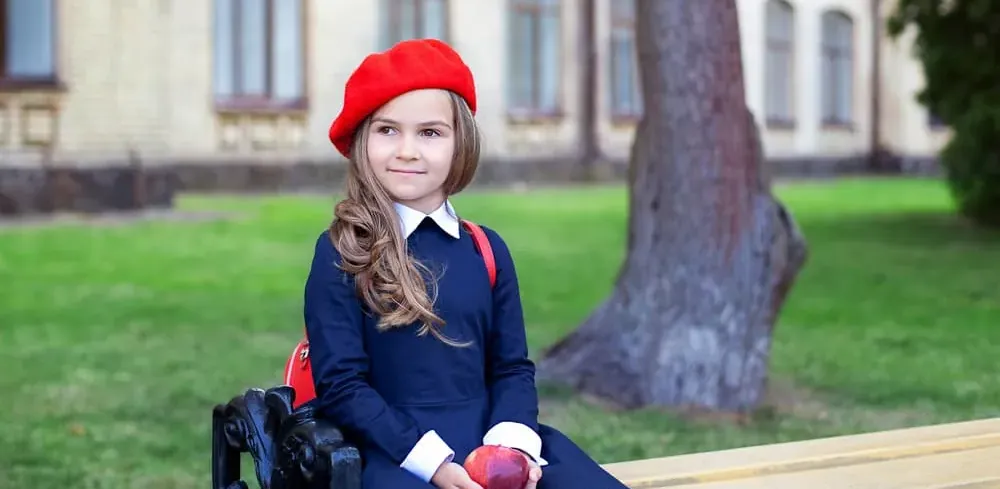
Every year, thousands of parents around the world dream of sending their children to study in the United Kingdom. But what really happens behind the walls of these prestigious institutions?
Interesting facts about schools in England can surprise even the most well-prepared parents.
Our colleagues shared an interesting story: one Russian student, upon arriving at a British school, wasn’t surprised by the academic curriculum, but by how seriously uniforms were taken. In UK schools, uniforms are not a dull obligation, but a source of pride.
Each school has its own unique uniform with a crest, colors, and a motto. Students at Westminster School wear a completely different outfit than those at Eton College. This cultivates what’s known as “school spirit”, a sense of belonging and pride in the school community.
In our experience, students quickly grow proud of their school identity. And this pride lasts for life; alumni often recall their school years with warmth decades later.

One of the most striking features of British schools is that from the age of 14, there are no traditional “classes.” Among British school traditions, one stands out: from the age of 14, students choose their own subjects to study.
Only three disciplines remain mandatory:
Everything else is optional. Want to study Ancient Greek instead of Geography? Go ahead. Prefer Drama over Economics? No one will stop you.
We were once asked by a parent: “Who keeps track of my child’s progress?” In British schools, there are no homeroom teachers; instead, there are personal tutors.
Each tutor oversees a small group of students, tracking their academic progress, sports achievements, and extracurricular involvement. This is a far more personalized approach than the one used in other international schools. To learn more about how UK schools shape character through their pastoral system, see our in-depth article.
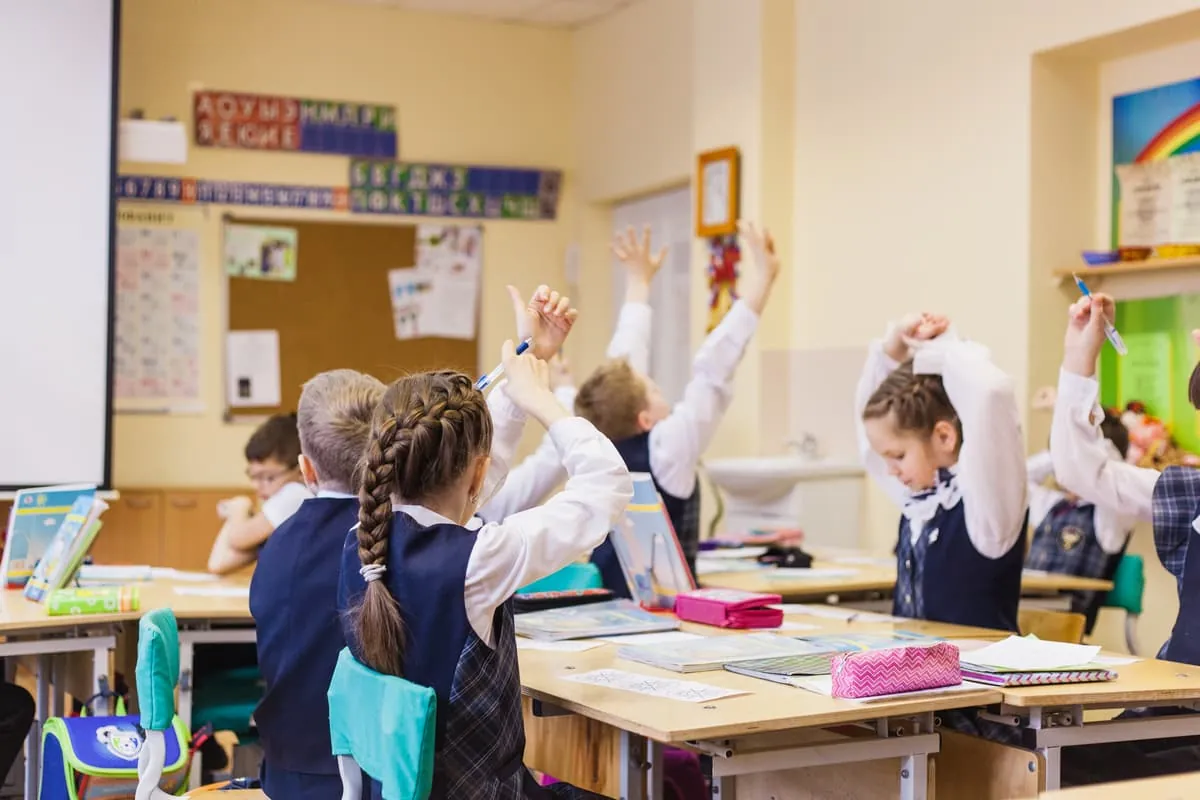
British school traditions extend to class sizes as well: on average, there are around 20 students per class, with a maximum of 24. In Russian schools, 30–35 is considered normal.
These smaller groups allow teachers to provide more individual attention. It’s no wonder that 98.9% of graduates from St Paul’s School achieve top GCSE scores.
Imagine this: it’s just a regular maths class, and suddenly Prince William or the Duchess of Cambridge walks in. In British schools, such visits aren’t rare. Members of the Royal Family frequently drop by unannounced.
This creates a special atmosphere, and students realise their school truly matters to the country.
Facts about UK schools highlight a logical system: school lasts for 13 years, not 11. The final two years (Sixth Form) are focused on preparing for university.
That’s why UK school graduates perform so well during admissions; they’re simply better prepared.
Founded in 597 AD in Canterbury, The King’s School is the oldest continuously operating school in the world. Just imagine — while Kievan Rus’ was still forming, this school was already producing scholars. Founded in AD 597 when St Augustine arrived in Canterbury on his mission from Rome, The King’s School has taught pupils continuously through Saxon kings, medieval scholars, the Tudors, and the modern era. Its current Edwardian-style ‘Canterbury dress’ uniform is itself over a century old, a reminder that British school traditions tend to layer rather than replace.
Some British schools house the most unexpected pets. At Lockers Park School, boys care for snakes instead of hamsters. This teaches responsibility and courage.
Studying at a British school opens doors to the world’s top universities. Graduates of elite schools are 100 times more likely to land jobs at FTSE 100 companies.
The UK system develops:
On top of that, a British school diploma is recognised worldwide. It’s an investment in your child’s future that pays off many times over. To understand the financial aspect, we recommend exploring our up-to-date guide on school fees in the UK in 2025.
In UK schools, sport isn’t just physical education — it’s character development. Rugby, cricket, and netball are traditional sports that build not only physical strength, but also mental resilience and a drive to win.
Many schools organize charity events. From a young age, children learn to help those in need, fostering a sense of social responsibility. House-based fundraising drives, volunteer days, and partnerships with local charities are woven into the weekly calendar at most independent schools, treating service as a habit rather than a one-off event.
A British education is not just about academics. It’s about shaping people who can change the world for the better. These British school traditions, which shaped generations of leaders, remain vibrant today.
What do you think? Should International students pursue their education in the UK? If you’re ready to take this important step, we recommend exploring our UK schools catalogue with detailed information on top institutions and admissions.
 How Much Does It Cost To Study At A British School?
Tuition fees at UK schools vary depending on the type of institution. Day schools in London typically cost around £10,000–20,000 per year, while boarding schools range from £28,000–35,000 per year. Interesting facts about UK schools include that the country has around 2,600 private schools and 500 boarding schools. Russian students can only attend private schools, as state schools are available exclusively to UK residents.
At What Age Can Children Start Attending School In The UK?British private schools accept children from the age of 5 into preparatory school. Interesting facts about British education show that schooling is divided into stages: Primary School (ages 5–11), Secondary School (11–16), and Sixth Form (16–18). For top-tier schools, many parents submit applications when the child is just 1–2 years old, as places are limited.
What Documents Are Required For Admission To A British School?To apply to a UK school, a student must have a strong command of English, excellent academic performance, and achievements in extracurricular fields. Admissions committees evaluate a child’s accomplishments in sports, science, or the arts. One interesting fact about British schools is the high competition — up to 16 applicants per place. Applicants must collect a full set of documents and apply for a student visa. The school must hold a licence to issue a CAS (Confirmation of Acceptance for Studies).
How Is The British Education System Different From The Russian One?There are significant differences between the British and Russian education systems. British school education lasts 13 years instead of 11. From age 14, there are no fixed classes — students choose their own subjects. The average class size is about 20 students, with a maximum of 24, compared to 30–35 in Russian schools. Instead of homeroom teachers, UK schools assign each student a personal tutor.
What Are The Advantages Of Studying At A British School?Studying at a British school opens the door to the world’s best universities. Graduates of top schools are 100 times more likely to secure jobs with prestigious FTSE 100 companies. The UK education system fosters critical thinking, independence, leadership skills, teamwork, and public speaking. A British school diploma is recognised worldwide — it’s a long-term investment in a child’s future. British schools aim to shape true leaders.
 GCSE subjects: the complete list and how to choose them
 Choosing GCSEs is a British school career’s first real academic decision: a compulsory core of English, maths and…
 The International Baccalaureate in the UK: a complete guide for international families
 The International Baccalaureate is the broad alternative to A-Levels: six subjects, a demanding core of independent…
 UK school immersion programme: try boarding before you commit
 Before a multi-year boarding commitment, let your child live it first. A school immersion programme places them inside…
 How to choose a British school: a parent’s decision guide
 Choosing a UK school is less about league tables than about fit. This guide turns the decision around: begin with your…
Submit your request and our manager will contact you shortly
 20 Wenlock Road, London, England, N1 7GU
 +44 7520 603085
 info@edvision-group.com


