

 RU
RU 
Summer programmes in the United Kingdom offer a unique opportunity to combine English language learning with full immersion in authentic British culture. With over 500 language schools and camps across the country, students aged 7 to 18 can choose from a wide range of options — from traditional English courses to specialised academic preparation programmes. Weekly costs range from £400 to £4,000, depending on accommodation type, lesson intensity, and extracurricular activities.
A summer language camp in the UK is more than just a holiday — it’s a true educational adventure. British boarding schools host well-rounded programmes that blend English lessons with cultural exploration, sports, and sightseeing.
Most courses take place on the campuses of prestigious boarding schools, allowing students to experience the atmosphere of traditional British education. Classes are taught by qualified teachers with TEFL or TESOL certification, many of whom are native speakers.
Interestingly, the tradition of hosting international students in the UK dates back over three centuries. British schools began inviting students from abroad as early as the 18th century, laying the foundation for today’s vibrant educational tourism sector.
A Wide Range Of Summer Options

Traditional summer camps in the UK include 15 to 25 hours of English lessons per week. Programmes are adapted to suit different proficiency levels, from beginner to advanced. Placement tests ensure students join the right class from day one.
Popular course formats include:
Many summer courses offer themed options such as:
Football-themed camps are especially popular, with clubs like Chelsea FC and Tottenham Hotspur offering immersive experiences that combine English learning with professional sports trainingи.
The Foundation Year is an intensive programme designed to prepare international students for full-time education in the UK. Think of it as a “trial term” — it helps students adapt to British academic standards and boost their English before enrolling in a full-time programme.
Foundation courses typically include:
Exchange Programmes
Short-term school placements — lasting from one week to a full academic year — allow international students to experience everyday life at a British school. These placements are ideal for students aged 12 to 17 who want to explore the UK education system before committing to long-term study.
Programmes usually include:
These short stays are a great way for students to improve their language skills, make international friends, and decide whether a British education is right for them. Learn more about our language school exchange programme for ages 11-18.

Summer holidays spent in a UK English camp offer a truly immersive environment, where English is spoken not just in class but throughout daily life. This constant exposure dramatically accelerates language acquisition.
It’s not uncommon for students to make more progress in spoken English over a few weeks in the UK than during years of studying at home. The key? Daily communication with native speakers and peer interaction with students from around the world.
UK summer camps offer much more than just classroom learning. Students take part in a rich cultural programme that includes visits to historic sites, museums, theatres and iconic landmarks. Trips to London are especially popular, featuring stops at Big Ben, Buckingham Palace, Tate Modern, and the British Museum.
A summer camp experience in the UK helps students build confidence, independence, and global awareness. They learn to make decisions, form friendships with peers from different backgrounds, and develop essential life skills.
Most summer schools in the UK offer accommodation in boarding residences. These are well-equipped facilities with comfortable bedrooms, common areas for socialising, sports halls, and libraries.
At schools like Bosworth Independent College, for example, students live in welcoming residences in central Cambridge, with easy access to the city’s main attraction.
Some programmes also offer the option to stay with a British host family. This experience provides additional language practice and a glimpse into daily British life..
The cost of a UK summer language camp varies widely depending on the type of programme and level of prestige:
Most packages typically include:

When selecting a summer English programme, consider what you want to achieve:
Programmes are tailored to different age brackets:
City or countryside? The choice is yours. Schools like Hurtwood House in Surrey offer peaceful, rural surroundings, while London-based programmes provide access to the capital’s top cultural and historical sites.
To take part in a UK summer programme, students will need:
The Edvision team offers full support with visa applications and all required documentation.
Most programmes accept students of all language levels, but a basic knowledge of English helps students settle in more easily. We recommend completing a placement test in advance to determine the best programme match.
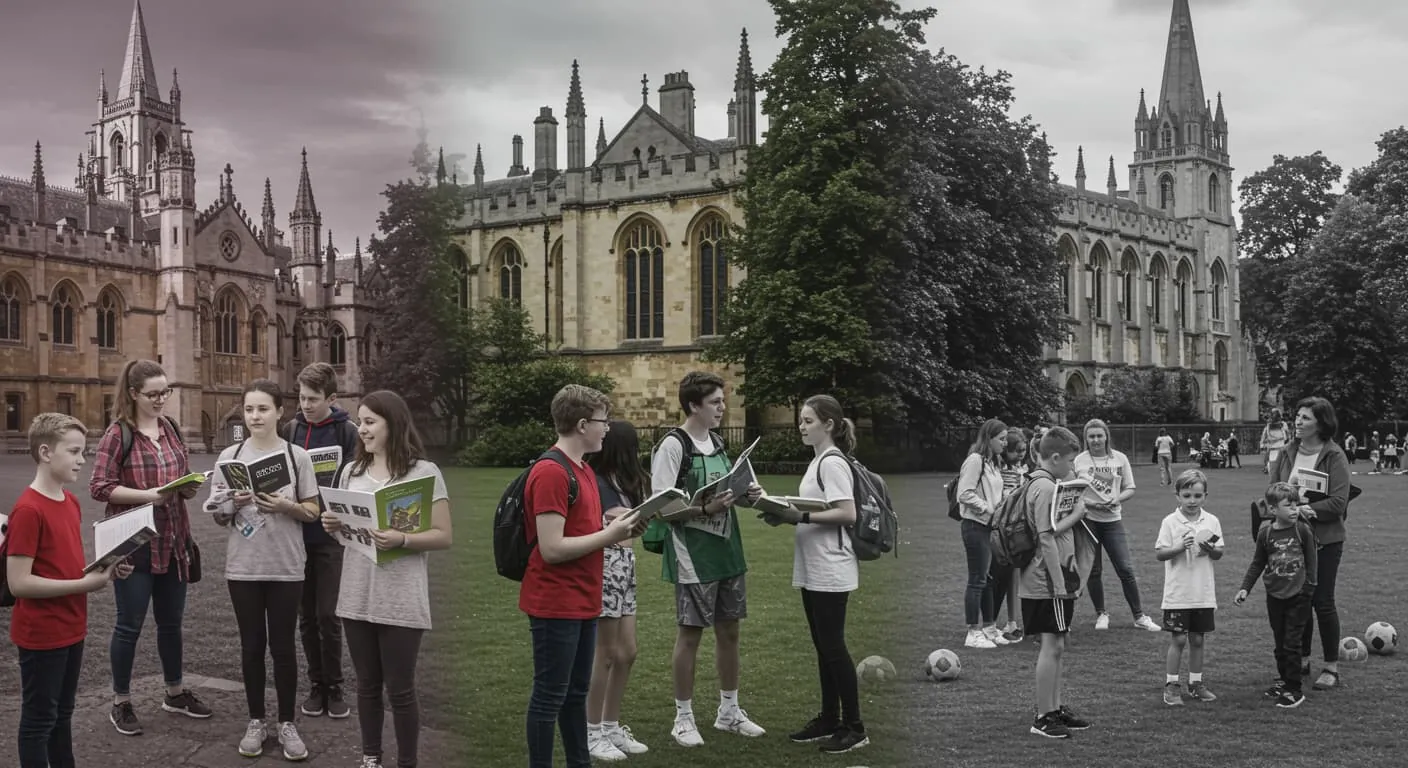
Oxford and Cambridge remain among the most prestigious destinations for summer education. These historic cities host programmes run by renowned colleges and universities, offering students a taste of elite British academia in a truly inspiring setting.
Some summer schools focus on specific talents and student needs. Westonbirt School, for example, is known for its leadership and creative arts programmes for girls, while Felsted School is celebrated for its excellence in sports training alongside academics.
Global education providers such as BELL, Embassy Summer, and Kings Education offer well-structured summer courses across various UK cities. Their programmes combine consistency in quality with the flexibility of location.
Families with young children (ages 3–7) can join summer language programmes that offer age-appropriate English classes for both parents and children. These courses encourage family bonding through shared learning.
Two-week English courses are ideal for students who are trying UK education for the first time or whose families have limited time for travel. These short stays still offer rich linguistic and cultural immersion.
Some schools offer blended formats that combine online preparation with on-campus learning. This model allows students to build confidence and vocabulary before fully immersing themselves in the UK school environment..
Участие в летних программах часто становится первым шагом к получению полного среднего образования в Великобритании. Многие студенты возвращаются для обучения в британских школах-пансионах или университетах.
Статистика показывает, что выпускники британских летних программ показывают более высокие результаты на международных языковых экзаменах и легче адаптируются к обучению за рубежом.
Based on years of experience, we recommend the following to ease the transition into a UK summer school:
We once had a student who struggled during the first few days—not with grammar, but with informal expressions his British classmates used daily. A little cultural preparation goes a long way!
The first few days can be overwhelming, especially for younger students. Most schools run dedicated induction programmes to help students settle in, make friends, and get familiar with the campus.
It’s natural for children to miss home. Prepare them in advance by discussing how they’ll stay in touch and encouraging independence in small steps before the trip.
British schools tend to be more structured and formal compared to other educational systems. Students may need time to get used to school rules, dress codes, and classroom etiquette.
Summer schools in the UK open doors to a world of opportunities. These programmes are not just about learning English—they foster personal growth, international awareness, and lifelong friendships. When chosen thoughtfully, a summer camp experience can become a powerful first step in your child’s global journey.
What about you? Are you considering sending your child to a UK summer camp this year?
 What Does a Typical English Summer Camp Programme in the UK Include?
A standard summer camp in England offers 20 academic hours of English per week, taught by qualified teachers and native speakers. In addition to language lessons, students enjoy full-board accommodation (either in school residences or host families), sports and creative workshops, and excursions to London and other cultural landmarks.
What Age Group Are English Summer Camps Designed For?Most UK summer camps are designed for students aged 12 to 18. Groups are organised by age and English level to ensure comfort and effective learning, both during classes and in free time. Some schools also offer junior programmes for children as young as 7.
How Can I Choose the Right English Summer Camp for My Child?When selecting a summer camp, consider key factors such as: Location (city centre or countryside), Teacher qualifications (look for TEFL/TESOL certification), Group size and teaching approach, Accommodation type (residence vs. homestay), Inclusion of activities, meals, and excursions, We recommend booking a free consultation with Edvision to find the best fit for your child’s goals and interests.
How Much Does a One-Week English Summer Camp Cost?Prices range from £800 to £4,000 per week, depending on: Type of accommodation, Number of lessons, Meals and transfers, Included excursions and extracurricular activities, Many schools offer early-bird discounts up to 10% for bookings made in advance.
Why Choose an English Summer Camp Abroad?Studying English in the UK allows students to be fully immersed in the language, significantly boosting speaking skills, vocabulary, and confidence. Children benefit from daily interaction with native speakers, real-life practice, and cultural exposure—leading to faster language progress and stronger motivation to continue learning.
 GCSE subjects: the complete list and how to choose them
 Choosing GCSEs is a British school career’s first real academic decision: a compulsory core of English, maths and…
 The International Baccalaureate in the UK: a complete guide for international families
 The International Baccalaureate is the broad alternative to A-Levels: six subjects, a demanding core of independent…
 UK school immersion programme: try boarding before you commit
 Before a multi-year boarding commitment, let your child live it first. A school immersion programme places them inside…
 How to choose a British school: a parent’s decision guide
 Choosing a UK school is less about league tables than about fit. This guide turns the decision around: begin with your…
Submit your request and our manager will contact you shortly
 20 Wenlock Road, London, England, N1 7GU
 +44 7520 603085
 info@edvision-group.com


