

 RU
RU 
Two to four weeks on an Eton or Oxford campus, in a cohort of 15 nationalities, speaking English from breakfast onwards — a UK summer camp is among the most formative investments a family can make before a teenager applies to a British school. This guide covers every decision: programme type, age tier, 2026 pricing, operators and the admin that worries parents most.
UK summer camps are not holidays with passport stamps. Each one is a two- to four-week residential stay on a campus like Eton, an Oxford college or Marlborough, where a 14-year-old from Dubai shares a corridor with peers from Madrid, São Paulo and Seoul and speaks English from breakfast onwards. The combination of heritage venues, native-accent immersion and a structured pastoral framework is what international families pay for, and what this guide unpacks.
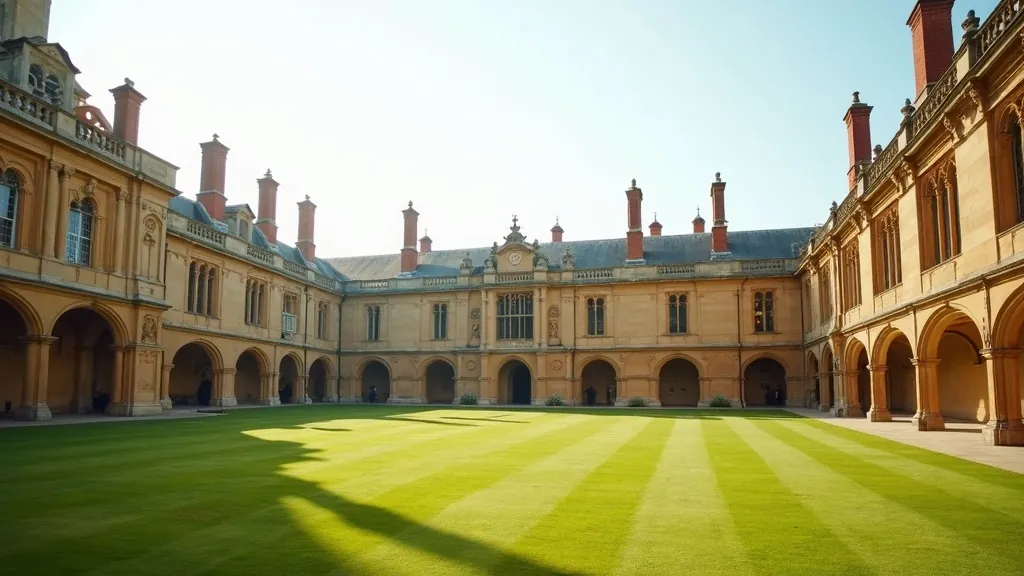
The strongest UK summer camps run inside the same buildings used by the country’s leading independent schools during term. Programmes are hosted at Eton, Oxford college quads, Marlborough, Dulwich and Canford, which means your child sleeps in real boarding houses and eats in panelled dining halls rather than a rented conference centre. That setting matters: it is the difference between studying English near Oxford and studying English at Oxford.
The peer mix is the second distinguishing feature. A typical residential cohort blends 15 to 20 nationalities, with no single language group dominant. Mainland European camps often skew heavily to one or two source countries; British operators deliberately cap nationality quotas so that English becomes the only practical lingua franca at lunch, on the football pitch and during the coach trip to Stratford or Bath.
Third is the safeguarding floor. UK summer camps for under-18s operate under UKVI safeguarding expectations and the same Designated Safeguarding Lead model schools use in term.
Most parents arrive thinking “summer camp” means one thing. In Britain it means four, and choosing the wrong format wastes both the fee and the holiday.
The default format. Operators such as Stafford House and Oxford International deliver 15 hours of English tuition per week, with afternoon activities and weekend excursions filling the rest. A CEFR A1 beginner is accepted; a placement test on arrival sorts students into level-banded classes of roughly 10 to 15. The “15 hours” figure is the British Council standard for a real summer school uk; anything less is English-flavoured branding.
For teenagers aiming at UK undergraduate entry, academic camps replace generalist English with subject electives — medicine, engineering, law, creative writing — taught seminar-style. Samiad’s NxtGen programme at Eton, designed for 14- to 18-year-olds, is the clearest example: a fortnight that doubles as a UCAS-shaped taster.
Less visible to international families but distinctively British. Adventure camps lead with kayaking, climbing and forest skills; EDVISION’s partner in the New Forest is a good example for the 8-17 bracket. Sports camps run single-discipline (football, tennis) or multi-sport. Both formats suit a child who is socially shy and will engage faster through activity than classroom English. If you are still weighing options, our companion piece on how to choose a summer camp in the UK walks through the selection criteria in more detail.

British summer camps uk for teens and younger children run on visibly different daily structures, and matching your child to the right tier matters more than picking the prestigious venue. SBC reaches down to age 6 at some campuses; Samiad accepts from 7; most language-focused operators set their floor at 8 and a meaningful number won’t take residential students below 11.
The junior tier, broadly 8 to 11, runs higher supervision ratios, simpler off-campus excursions and structured evening activities on site. Lights-out is early, homesickness protocols are explicit and children move between lessons and activities in fixed groups with the same counsellors throughout the fortnight. This is the tier where the residential summer camps uk model works as a try-before-boarding test, useful for families considering 11+ or 13+ entry. See our note on the optimal age to enter a British school for how those entry points map to age.
The teen tier, 12 to 17, looks different. Older students get more independence on campus, off-site weekend trips to London or Cambridge, and from age 14 the option of university-prep tracks like NxtGen at Eton. By 16 or 17, the experience resembles undergraduate residence more than supervised camp, which is precisely the point for families using it as a sixth-form preview.
British summer camps sit at the European market’s upper end; 2026 prices reflect that. Samiad’s 14-night programmes are listed between £3,550 and £3,900 for the 2026 season depending on campus. SBC’s Eton College Summer Academy is around £4,495 for a two-week residential stay for 13- to 17-year-olds in 2026. EDVISION’s partner Adventure Camps in the New Forest runs £925 to £980 per week for the 2026 season per partner data, sitting at the more accessible end. For broader context on independent education costs, our UK private school cost in 2026 guide compares term-time fees.
Across the major operators, the published fee covers tuition, full-board accommodation on campus, the published activity programme, supervised weekend excursions and a placement test. Compare two quotes only after confirming all five line items match; operators package these differently.
Airport transfers from Heathrow or Gatwick are usually charged separately, typically £150 to £250 each way. Insurance, visa or ETA fees, unaccompanied-minor airline service, pocket money, optional excursions and laundry are also additional. Budget roughly 15% on top of the headline fee for these.
One pricing detail worth confirming: from 1 January 2025, the UK applies 20% VAT to private school fees, and whether this is passed through to summer programmes varies by operator. Ask explicitly before paying a deposit.
Five operators account for most of the residential british summer camps EDVISION places families with. Recognising the names during your own research saves considerable time.
Choosing between these is rarely about quality; all five run safe, well-staffed programmes. The real question is how well the campus age tier, programme type and peer-mix culture map to a specific child.
Flagship venues — Eton, the Oxford colleges, Cambridge — sell out earlier each year. For summer 2026, the realistic booking window for these closes in late winter; six months ahead is a sensible rule, and for specific date weeks (typically the second half of July) closer to nine.
Some operators reinforce this with explicit pricing levers. Oxford Summer Courses raises fees by £500 on 1 June, an early-booking discount in everything but name. Most providers run weekly Sunday starts from late June through mid-August.
The admin around a summer camp uk stay is lighter than parents often assume. For a course of six months or less, the correct route is the Standard Visitor visa, not the Child Student visa. Nationals of countries with visa-free access, such as the UAE, Saudi Arabia and most European countries, use the Electronic Travel Authorisation (ETA) instead, applied for online before travel. Visa rules change; confirm the current position on gov.uk before booking flights.
Guardianship is the second concern, and the answer here is reassuring. UK guardianship is a year-round requirement for term-time boarders on a Child Student visa. For a short summer programme, the residential operator provides 24-hour pastoral care under UKVI safeguarding expectations, which removes the need for an external UK guardian. Named housemasters, on-call medical cover and Designated Safeguarding Leads are standard across the major operators.
English level rarely blocks entry. Most junior programmes accept CEFR A1 (true beginner), with a placement test on arrival sorting students into level-banded classes. A child with two years of school English will not be the weakest in the room.
UK summer camps sell on EFL hours and an end-of-camp certificate. Both are the easiest things for a parent to point at, and the least important things the child takes home. A first stretch away from family, in a structured but unfamiliar environment, is where independence is built: managing a laundry bag, a homesickness Tuesday and a disagreement with a roommate without a parent in the room.
English confidence follows the same pattern. Two weeks of daily use (ordering food, asking for the wifi password, negotiating who’s on which football team) moves a child further than a term of classroom drills. A peer network spanning 15 to 20 countries also tends to outlast the camp itself through group chats and reciprocal visits.
For families considering 11+, 13+ or 16+ entry to a British boarding school, a summer programme is also the cleanest, lowest-risk pilot. Two weeks at Eton or in an Oxford college tells you whether boarding suits your child far more reliably than any open day. It also steers the longer search for the most prestigious schools in England with real evidence.
 From what age can my child attend a UK summer camp without a parent?
Most residential operators set their floor at 8 years old, though SBC accepts children from 6 and Samiad from 7 at selected campuses. Under-11s travel in the junior tier, which runs higher supervision ratios and structured on-campus evenings. A child must be comfortable sleeping away from home before you consider any residential programme, regardless of age.
Does my child need a visa for a two-week summer camp in the UK?For a stay of six months or less, the correct route is the Standard Visitor visa — not the Child Student visa. Nationals of visa-free countries, including the UAE and Saudi Arabia, apply for an Electronic Travel Authorisation (ETA) online before travel instead. Visa rules can change; always verify the current position on gov.uk before booking flights.
What English level does my child need before attending a UK summer camp?Most junior and language-focused programmes accept CEFR A1 — true beginner level. A placement test on arrival sorts students into level-banded groups, so no prior preparation is required beyond what your child already has. Academic and university-prep camps such as Samiad NxtGen typically expect a stronger working level; confirm the specific entry requirement with the operator before applying.
Are airport transfers from Heathrow or Gatwick included in the camp fee?In most cases, no. Airport transfers are charged separately by the majority of UK operators, typically ranging from £150 to £250 each way. Some operators offer an optional meet-and-greet or group transfer service for an additional fee; others leave families to arrange private transfers independently. Confirm this line item before paying a deposit, as costs add up quickly for two-way journeys.
How far ahead should I book a place at Eton or Oxford for summer 2026?Six months ahead is the practical minimum for flagship venues such as Eton College and the Oxford colleges; for the second half of July — the most popular fortnight — closer to nine months is realistic. Oxford Summer Courses raises its fees by £500 on 1 June, so booking in winter saves both the place and the surcharge. Operators open 2026 registration in autumn 2025.
Did the January 2025 VAT change make UK summer camps more expensive?Possibly, depending on the operator. From 1 January 2025, the UK applies standard 20% VAT to private school fees. Whether this is passed through to summer programmes hosted on independent school campuses varies: some operators absorb the cost, others itemise it separately. Ask the operator explicitly whether the 2026 programme fee is VAT-inclusive before paying a deposit — the answer differs across providers and campuses.
Can a UK summer camp serve as a trial run before applying to a British boarding school?Yes — and it is one of the most practical ways to test fit. Two weeks at Eton or in an Oxford college reveals whether a child takes to communal living, English-only days and distance from family far more reliably than an open day. Families considering 11+, 13+ or 16+ entry often use a summer programme as a low-risk pilot before committing to a full boarding application.
 GCSE subjects: the complete list and how to choose them
 Choosing GCSEs is a British school career’s first real academic decision: a compulsory core of English, maths and…
 The International Baccalaureate in the UK: a complete guide for international families
 The International Baccalaureate is the broad alternative to A-Levels: six subjects, a demanding core of independent…
 UK school immersion programme: try boarding before you commit
 Before a multi-year boarding commitment, let your child live it first. A school immersion programme places them inside…
 How to choose a British school: a parent’s decision guide
 Choosing a UK school is less about league tables than about fit. This guide turns the decision around: begin with your…
Submit your request and our manager will contact you shortly
 20 Wenlock Road, London, England, N1 7GU
 +44 7520 603085
 info@edvision-group.com


