

 RU
RU 
“How many years do students spend at school in the UK?” — this is one of the first questions parents ask when considering British education for their children. Unlike the 11-year system familiar in many countries, school education in the UK spans a full 13 years. While this may seem lengthy at first, it is precisely this structure that enables British schools to prepare students for top universities worldwide with academic depth and rigour.
The number of years a child spends in a UK school depends on the age they start and the academic goals the family sets. Children typically begin their school journey earlier than in many countries — usually between the ages of 4 and 5 — and complete their secondary education at 18.
So, what age do children start school in England? Compulsory education officially begins at age 5, but many private schools enrol pupils as early as 3 or 4 in pre-preparatory classes. This early start helps children adjust to the school environment and develop key social and language skills.
The British school system is divided into several key stages:

How long do children stay in primary school in the UK? This stage lasts six years, from ages 5 to 11. Many experts consider this one of the most crucial phases in the British education system. It’s where children not only acquire essential academic skills but also develop curiosity, critical thinking, and independent learning habits.
A unique feature of British primary schools is their emphasis on collaborative, project-based learning. Instead of rote memorisation, students work in groups, learn how to defend their viewpoints, and take part in meaningful discussions. This approach nurtures creativity and confidence from an early age.
By the time they reach Key Stage 2 (Years 3 to 6), students explore a broad curriculum that includes programming, design technology, visual arts, and public speaking — helping them discover their strengths and interests for future academic choices.
When does compulsory education end in the UK? At the age of 16, students complete their General Certificate of Secondary Education (GCSE) exams. This qualification, taken at the end of Key Stage 4, marks the completion of mandatory schooling — and sets the stage for more specialised studies.
The GCSE curriculum typically consists of 9 to 12 subjects. Core subjects like English, Mathematics, and Science are mandatory, while the rest are chosen by the student based on their interests and future goals. This flexibility allows pupils to begin shaping their academic path as early as 14.
International students often enrol in one-year intensive GCSE preparation courses or choose the iGCSE programme, which is widely recognised by schools around the world. Many families also consider enrolling their children in UK summer camps to boost academic English and gain exposure to the British school environment.

At what age do students finish school in the UK? Most complete their secondary education at 18, following the A-Level programme. This final stage — Key Stage 5 — is highly focused and designed to prepare students for university-level study.
During the A-Level course, students typically choose three or four subjects aligned with their intended degree. The programme is considered the gold standard for entry into top UK universities and is also accepted by leading institutions in the US, Canada, Australia, and other countries.
An alternative to A-Levels is the Foundation Year — a popular route among international students. It offers a tailored curriculum that bridges academic gaps, boosts language proficiency, and supports a smoother transition into undergraduate education..
How many years do international students study at a UK school? It depends on when they enter the system. Here are some of the most common and effective entry points:
Many families choose to begin the transition early through preparatory programmes or short-term study experiences, helping students become confident and well-prepared for full-time education in the UK.
At what age do students typically finish school in the UK if they start early? In most cases, they still graduate at 18, but early entry offers several significant advantages:
Language immersion. Children who join the British education system before the age of 13–14 acquire English language skills much faster — often reaching native-level fluency. This is essential not only for academic success, but also for smooth social integration.
Cultural integration. UK schools go beyond academics — they also nurture personal development. Students are taught leadership, independence, and responsibility through structured pastoral care and school traditions.
Academic readiness. The earlier a student enters the British system, the more time they have to understand expectations around independent study, research projects, and critical thinking — core elements of UK education.
How many years do students study in UK schools if they enter after age 16? Usually, two years for A-Levels or one year for specialised university preparation programmes. This route requires a more focused and intensive approach — but also offers unique benefits.
At 16–17, students tend to have a clearer understanding of their academic strengths and career goals. This allows them to concentrate on a small number of relevant subjects tailored to their chosen university course.
Late-entry students often opt for academically rigorous sixth form colleges or international boarding schools that specialize in university preparation. Institutions like Oxford Sixth Form College and Brighton College are known for their strong A-Level programmes and excellent university placement records.
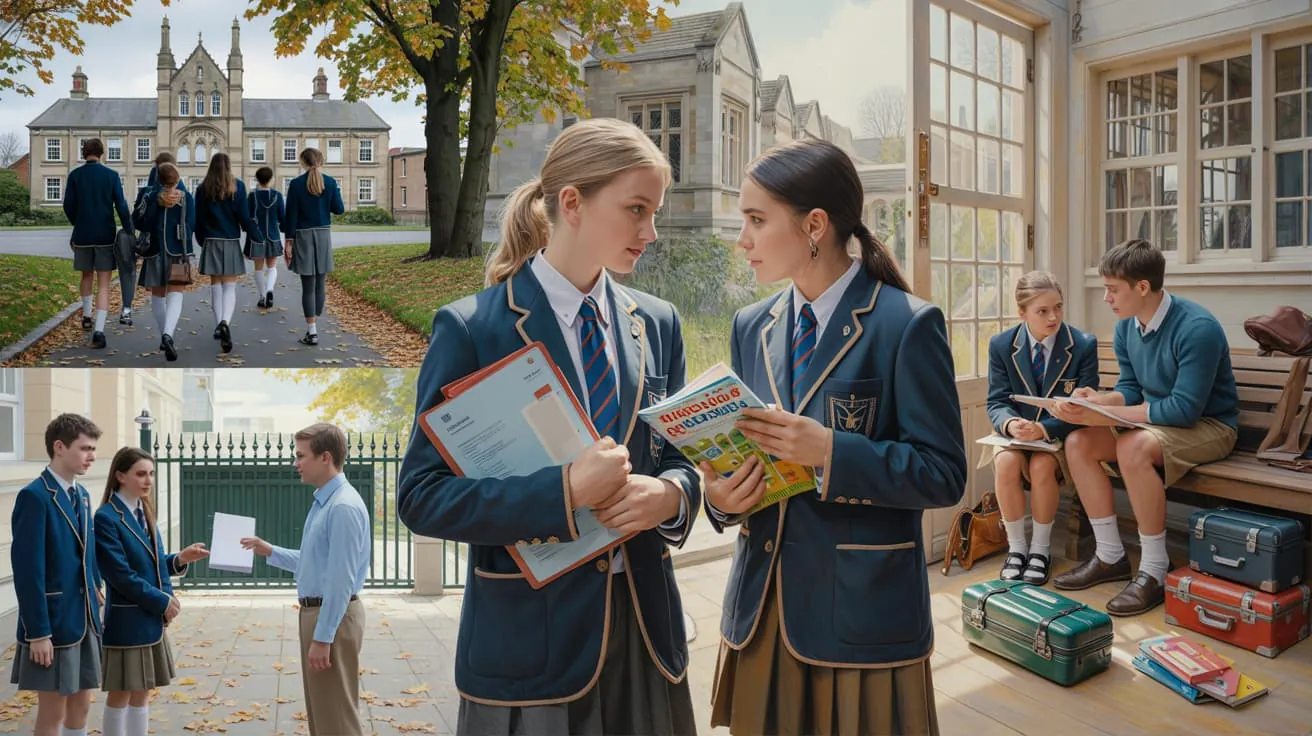
How is the UK school year structured? The academic year is divided into three terms: Autumn (September–December), Spring (January–March), and Summer (April–July). Holidays at independent schools tend to be longer than at state schools, offering more time for travel, rest, or additional learning opportunities.
Tuition fees vary considerably by school type and location. For the 2026/27 academic year, average day school fees sit around £19,000 per year, with average boarding fees around £50,000 per year (Good Schools Guide). Typical ranges run from £15,000 to £42,000 for day schools and £45,000 to £65,000 for boarding, with elite boarding schools exceeding £66,000 — figures that reflect the 20% VAT introduced on independent school fees from January 2025. Still, many families agree: the return on investment is substantial, with graduates gaining access to top universities and global career paths.
Important note: International students under 18 must have a UK-based guardian. This guardianship service is typically provided by professional agencies and is a legal requirement for visa compliance.
When choosing a school, it’s important to look beyond academic league tables. Specialisation plays a crucial role. For example, Fine Arts College is ideal for creatively inclined students, while Bromsgrove School is known for its strength in the sciences.
Some schools offer distinctive academic approaches. Hurtwood House is recognised for its innovative teaching methods, while Wycliffe College combines academic success with an outstanding sports programme.
The admissions process for UK schools requires careful planning. In addition to academic transcripts, most schools conduct interviews and entrance assessments. For international applicants, English language testing is a standard part of the admissions process.
At what age do students graduate from school in the UK? Typically at 18, with strong A-Level results and a clear academic focus. This level of preparation opens the doors not only to leading British universities, but also to world-renowned institutions in the US, Canada, and beyond.
How many years do students study in UK schools? The full academic journey spans 13 years — but the value of a British education more than justifies its length. The system doesn’t just deliver knowledge — it cultivates independence, critical thinking, and leadership skills.
Choosing the right age for entry depends on the student’s language level, personality, and long-term goals. Ultimately, British education is an investment in the future — one that opens up a world of academic, personal, and professional opportunities.
Are you ready to explore what a British school education could offer your child?
 At what age do children start and finish school in the UK?
Compulsory education in the UK runs from age 5 to 16. However, most children start earlier, joining Reception at age 4. Students who continue into Sixth Form for A-levels typically complete their schooling at 18.
How long do primary and secondary education last in the UK?Primary school (Years 1–6) lasts for six years, and secondary school (Years 7–11) spans five years. Students who wish to pursue further academic studies after age 16 continue into Sixth Form (Years 12–13) for an additional two years.
At what age do students complete compulsory education in the UK?At the end of Year 11, usually at age 16, students sit their GCSE exams and receive a certificate of general secondary education. They can then choose to enter a college or Sixth Form for advanced qualifications like A-levels.
What is Reception and when does it start?Reception is a preparatory year before Year 1, designed for children aged 4–5. It is part of the Early Years Foundation Stage and helps ease the transition into formal schooling.
How many years does full-time schooling take in the UK?The full school journey from Reception to Year 13 takes 14 years: one year of Reception, six years of primary school, five years of secondary school, and two years of Sixth Form (A-level programme).
 GCSE subjects: the complete list and how to choose them
 Choosing GCSEs is a British school career’s first real academic decision: a compulsory core of English, maths and…
 The International Baccalaureate in the UK: a complete guide for international families
 The International Baccalaureate is the broad alternative to A-Levels: six subjects, a demanding core of independent…
 UK school immersion programme: try boarding before you commit
 Before a multi-year boarding commitment, let your child live it first. A school immersion programme places them inside…
 How to choose a British school: a parent’s decision guide
 Choosing a UK school is less about league tables than about fit. This guide turns the decision around: begin with your…
Submit your request and our manager will contact you shortly
 20 Wenlock Road, London, England, N1 7GU
 +44 7520 603085
 info@edvision-group.com


